

Perfectly Cooked Meat Every Time: Cooking Tips
Cooking Tip: Perfectly Cooked Meat Every Time
Cooking meat perfectly is easier than you think! Whether you’re a home cook or a professional chef, controlling cooking time prevents undercooked or dry meat, while preserving flavor and tenderness. Here are our essential tips for mastering beef, chicken, pork, and veal every time.
How to Avoid Undercooked or Dry Meat
Nothing is more frustrating than preparing a steak, roast, or poultry only to end up with meat that’s raw in the center or tough and dry. Cooking meat requires the right combination of techniques, tools, and attention. Follow these tips to master the art.
1. Understanding common mistakes

-
Overcooking: Excess heat dries out muscle fibers and juices.
-
Undercooking: Meat remains raw in the center, risky for chicken or pork.
-
Judging by sight: Color or touch is often misleading.
-
Piercing the meat: Causes juices to escape, making meat dry
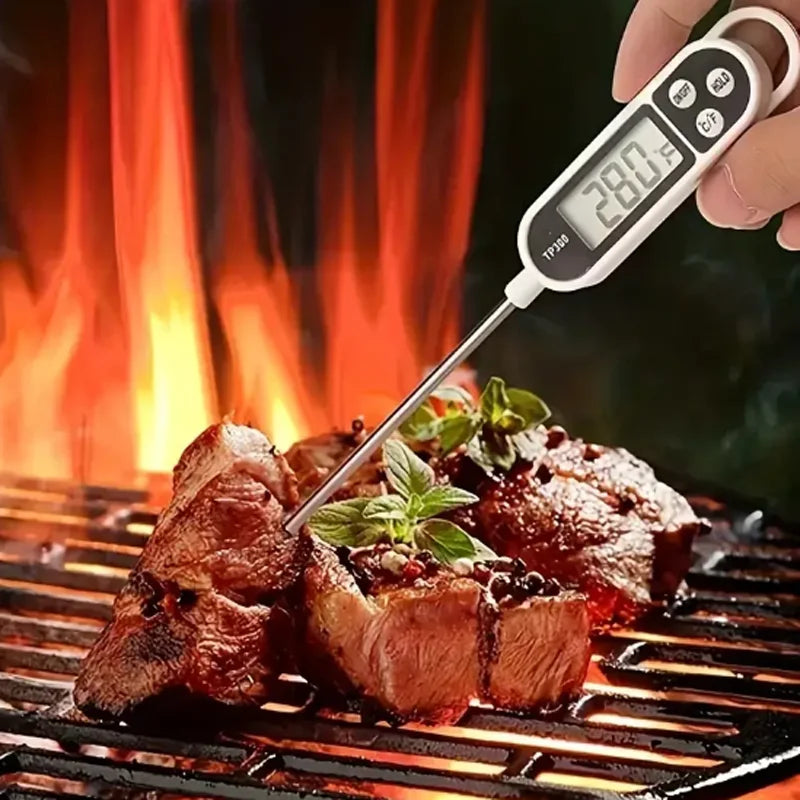
2. The essential tool: the kitchen thermometer

The thermometer is your secret weapon for perfect meat. It allows you to:
-
Check the exact internal temperature.
-
Use it for all types of meat: beef, veal, pork, poultry, and fish.
-
Cook to your preferred doneness: rare, medium, or well-done.
-
Eliminate guesswork and stress
3. Techniques to avoid eating meat that is too raw

-
Preheat properly: Pan, oven, or grill must reach the right temperature.
-
Uniform thickness: Ensure even cooking by flattening thick cuts.
-
Monitor internal temperature:
-
Rare beef: 50–55°C | Medium: 60–65°C | Well-done: 70°C+
-
Pork: 70°C+
-
Chicken: 75°C+
-
-
Cook gradually: Moderate heat prevents burnt exteriors and tender centers.
4. Techniques to prevent meat from drying out

-
Let the meat rest: 5–10 minutes after cooking to redistribute juices.
-
Marinate: Oil, acid (lemon/vinegar), and spices protect and flavor meat.
-
Brush with oil or butter: Helps retain moisture.
-
Never pierce: Keeps juices inside.
5. Other practical tips

-
Use a high-quality pan or grill for even heat.
-
Pat meat dry for a perfect crust.
-
Adjust cooking time according to cut size.
-
Know your meat: some cuts cook faster, others need slow cooking.
6. Bonus: Ideal temperature chart

-
Beef/Veal : rare 50-55°C, medium 60-65°C, well-done 70°C+
-
Pork : medium-rare 70°C+, well-done 75°C+
-
Chicken/Poultry : 75°C+ to be safe
Recommended temperatures for cooking meat
| Type of meat | Bleeding | To the point | Well cooked |
|---|---|---|---|
| Beef / Veal | 50-55°C | 60-65°C | 70°C+ |
| Pork | 60-65°C | 70°C+ | 75°C+ |
| Chicken / Poultry | 75°C+ | — | — |
Why is resting the meat crucial?
Letting the meat rest for 5 to 10 minutes after cooking allows the muscle fibers to relax, maximizing juiciness and tenderness. Without resting, the juices run out immediately when sliced, and the meat becomes dry.
Mistakes to avoid for perfectly cooked meat
Even with good ingredients, improper cooking can ruin a dish. Here are the most common mistakes and how to avoid them:
1. Underestimating the internal temperature
Many cooks rely solely on the color or feel of the meat. The result: a piece that's either too raw in the center or, conversely, overcooked around the edges. The solution : use a meat thermometer for precise control.
2. Overcooking by precipitation
Trying to cook meat quickly over too high a heat can char the outside and leave the inside undercooked or, worse, completely dry. Tip : opt for gentle, gradual cooking, adapted to the thickness of the cut.
3. Pierce the meat with a fork
This mistake causes the juices to escape and leaves the meat dry. Solution : use tongs or a spatula to turn the meat, and never pierce it while cooking.
4. Forgetting to let it rest after cooking
Cutting the meat immediately after cooking prevents the juices from redistributing. This makes the meat drier and less tender. Tip : Let it rest for 5 to 10 minutes under aluminum foil so the residual heat finishes cooking and the fibers relax.
5. Choosing the wrong cooking method for the type of meat
Some meats require specific temperatures to be safe and flavorful. For example, chicken must reach 75°C to avoid any health risks. Solution : consult temperature guides according to the type of meat and your cooking preference.
6. Neglecting meat preparation
Meat that is too wet or too cold will not cook evenly. Tip : take it out of the refrigerator 15 to 30 minutes before cooking and pat it dry slightly to ensure a nice sear.
7. Do not use a thermometer for large parts
The thicker the cut of meat, the harder it is to judge its doneness by eye. Thin steaks can be cooked by eye, but a roast or filet mignon requires a thermometer to guarantee a perfect result.
Advanced tips for successful cooking every time
Mastering meat cooking is not just about following a temperature chart: a few techniques and tips can transform your dish into a true gastronomic success.
1. Use an accurate thermometer
For large cuts of meat such as roasts or whole poultry, a digital probe thermometer is essential. Place the probe in the center of the thickest part, without touching the bone or fatty areas, to obtain a reliable reading.
2. Sear before cooking slowly
Searing the meat over high heat for 1 to 2 minutes on each side creates a flavorful crust and seals in the juices. Then, finish cooking over low heat or in the oven for a tender and juicy result.
3. Master marinades and coatings
Marinating meat or lightly brushing it with oil or butter before cooking not only adds flavor but also helps retain moisture. For red meats, an acidic marinade (vinegar, lemon juice) or a sweet one (honey, maple syrup) can enhance the taste.
4. Don't forget to rest
After cooking, let the meat rest under aluminum foil for 5 to 10 minutes. The fibers relax and the juices redistribute evenly, making each bite more tender and flavorful.
5. Adjust the cooking time according to the thickness
Thin steaks cook very quickly and require less control, while thick cuts like roasts require more time and careful monitoring of the temperature.
6. Experiment with complementary techniques
-
Oven cooking with a moderate thermostat : ideal for roasts and whole poultry.
-
Pan cooking with a lid : retains moisture and speeds up the cooking of thicker meats.
-
Sous vide : a professional method that guarantees even cooking and maximum tenderness.
7. Choose the right utensils
A thick or cast-iron pan retains heat better and distributes cooking evenly. Tongs are preferable to forks for handling meat without losing juices.
8. Respect internal temperatures
Refer to the cooking guides according to the type of meat and your preference: rare, medium, or well-done. This avoids unpleasant surprises and guarantees safety and flavor.
9. Monitor visually and olfactorily
While a thermometer is essential, also observe the color and smell of the meat during cooking. This can alert you if the cooking is going off track or if the meat is starting to dry out.
10. Experiment and adjust
Every piece of meat is unique: adjust your cooking times, temperatures, and marinades according to the size, cut, and your personal preferences. Experience is your best guide to becoming an accomplished cook.
| Type of meat | Desired cooking time | Internal temperature | Approximate cooking time* | Recommended utensil |
|---|---|---|---|---|
| Beef / Veal | Bleeding | 50-55°C | 2-4 min per side (steak) | Cast iron pan / Thermometer |
| To the point | 60-65°C | 4-6 min per side (steak) | Cast iron pan / Thermometer | |
| Cooked through | 70°C+ | 6-8 min per side (steak) | Cast iron pan / Thermometer | |
| Pork | To the point | 70°C+ | 20-30 min per 500 g (roast) | Oven / Thermometer |
| Cooked through | 75°C+ | 25-35 min per 500 g (roast) | Oven / Thermometer | |
| Chicken / Poultry | Cooked through | 75°C+ | 20 minutes per 500g (oven) | Oven / Thermometer |
| Lamb | Bleeding | 50-55°C | 2-4 min per side (chops) | Stove / Grill / Thermometer |
| To the point | 60-65°C | 4-6 min per side | Stove / Grill / Thermometer | |
| Cooked through | 70°C+ | 6-8 min per side | Stove / Grill / Thermometer | |
| Fish | To the point | 50-55°C | 3-5 min per side | Non-stick pan / Thermometer |
| Cooked through | 60°C+ | 5-7 min per side | Non-stick pan / Thermometer |
Summary
- A kitchen thermometer is key to successful cooking.
- It guarantees tender, juicy and perfectly cooked meat.
- Respect the recommended temperatures and let the meat rest.
- These simple steps will take you from amateur cook to accomplished chef.
Ready to cook like a pro?
Discover our professional kitchen thermometer and all our cooking utensils to enhance your meats, available on Ustensile de Chef .
FAQ - Cooking meat: tips for success every time
1. Why is my meat always too raw inside?
The internal temperature has not been reached; use an accurate thermometer to check.
2. How to prevent the meat from becoming too dry?
Respect the temperatures, let it rest and marinate or brush with oil before cooking.
3. Where should the thermometer probe be inserted for an accurate reading?
In the thickest part, without touching the bone or overly fatty areas.
4. Does the thermometer work for all meats?
Yes, beef, pork, poultry, lamb and fish.
5. How long should the meat be left to rest after cooking?
Allow 5 to 10 minutes to distribute the juices evenly.
6. Can I use the thermometer for the oven and the pan?
Yes, most models are suitable for both methods.
7. Does the meat continue to cook after being removed from the heat?
Yes, the residual heat finishes the cooking process.
8. What is the difference between rare and medium-rare?
Internal temperature: rare (50-55°C), medium (60-65°C).
9. Why is the meat tough after cooking?
Overcooking or lack of resting time, fibers not relaxed.
10. Is it necessary to marinate all meats?
No, but it improves tenderness and flavor.
11. Can I use a fork to turn the meat over?
Avoid piercing it to prevent losing the juices.
12. How to choose a good kitchen thermometer?
Precision, speed and compatibility with all meats.
13. Is slow cooking better for all types of meat?
Yes, especially for thick or tender pieces.
14. Which meats require a minimum internal temperature?
Pork and poultry must reach a minimum temperature of 75°C.
15. Does minced meat follow the same rules?
No, it must always be thoroughly cooked.
16. How to avoid bubbles or holes in a steak?
Regular temperature and rest before cooking.
17. Should the meat be covered during cooking?
According to the recipe, but it retains moisture.
18. Can I cook several meats at the same time?
Yes, but check the temperature of each room.
19. How do I clean the thermometer after use?
Wash with hot soapy water, but avoid total immersion if electronic.
20. What accessories help to ensure successful cooking?
Thermometer, tongs, non-stick pan, cutting board.
Blog articles to read:
- Choosing the right kitchen utensils in 2025 / Chef's utensil
- How to choose the perfect kitchen knife | Chef's utensil
- How to Choose the Perfect Pan | Chef's Utensil
- Sticky pan: causes and solutions you should know | Chef's utensil