

Ustensile de chef
Fondant Cake Smoother – Smoothing Tool
Fondant Cake Smoother – Smoothing Tool
Free delivery in mainland France. Processing within 24 to 72 business hours, followed by estimated delivery within 7 to 15 business days after shipping. Tracking sent by email.
Couldn't load pickup availability
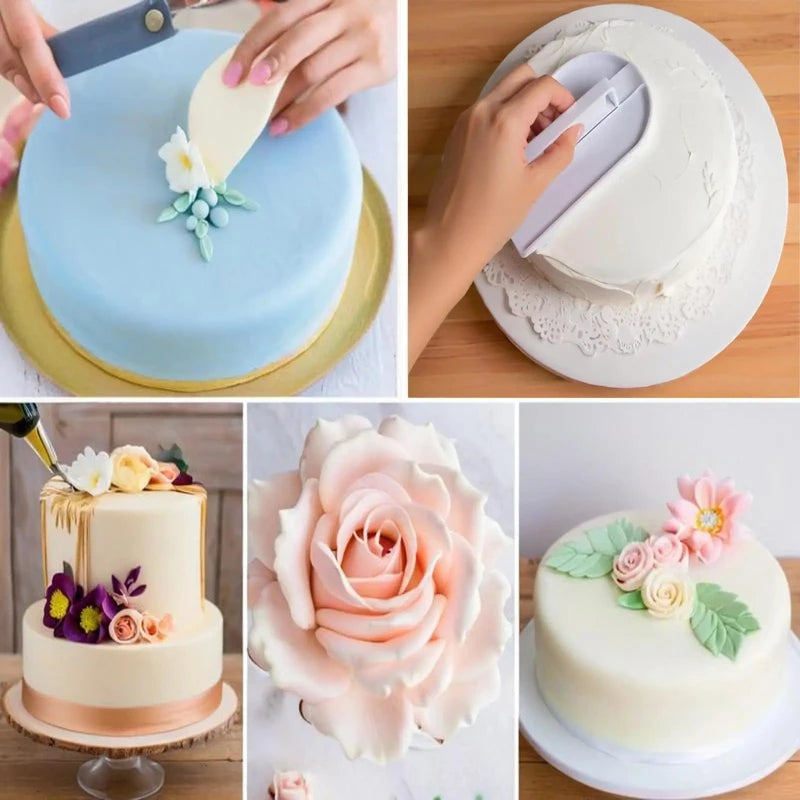
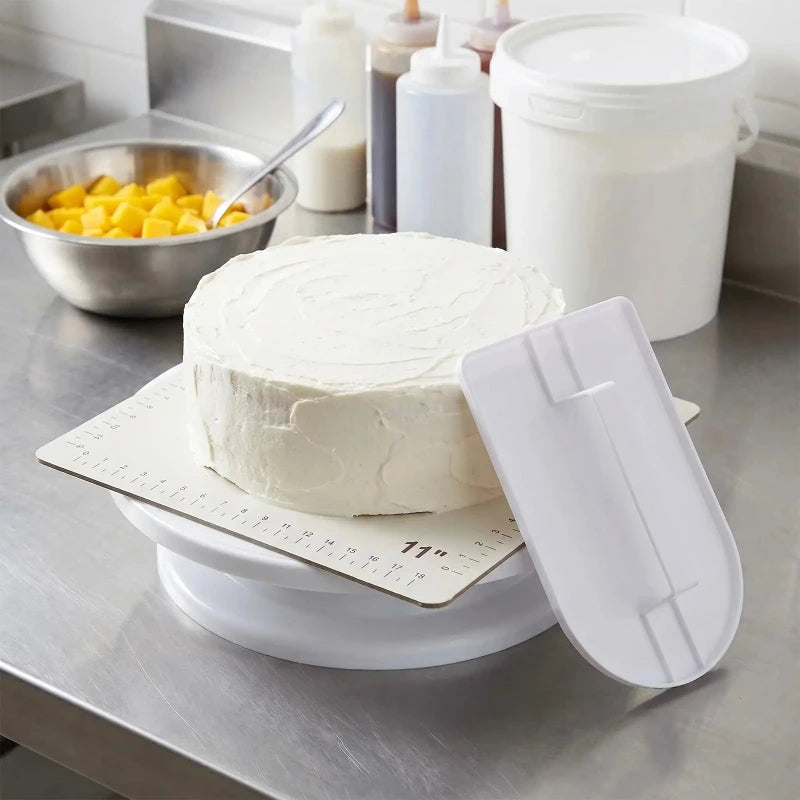
A fondant coating may show small irregularities after being applied: creases, handling marks, or uneven areas. This cake fondant smoother allows you to work the surface by hand to better distribute small irregularities and achieve a visually more uniform coating.
A simple accessory for gradually smoothing fondant and working finishing details directly on the cake.
Why use a fondant smoother?
Fondant must be positioned and then smoothed over the cake before adding any decorative elements. Hands can move and position the paste, but they do not always create a sufficiently smooth surface.
The smoother provides a rigid contact surface that allows you to apply controlled pressure to the fondant. This lets you gradually work areas that show marks or irregularities.
To gradually smooth the coating
Imagine your cake covered in fondant. After folding the paste over the sides, some areas may show small bumps or marks left during handling.
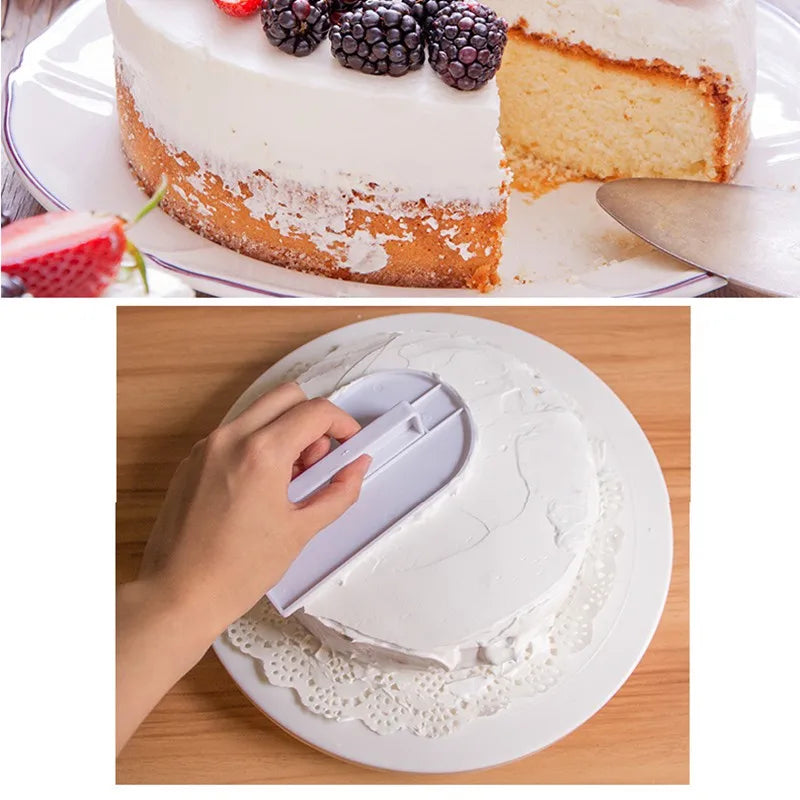
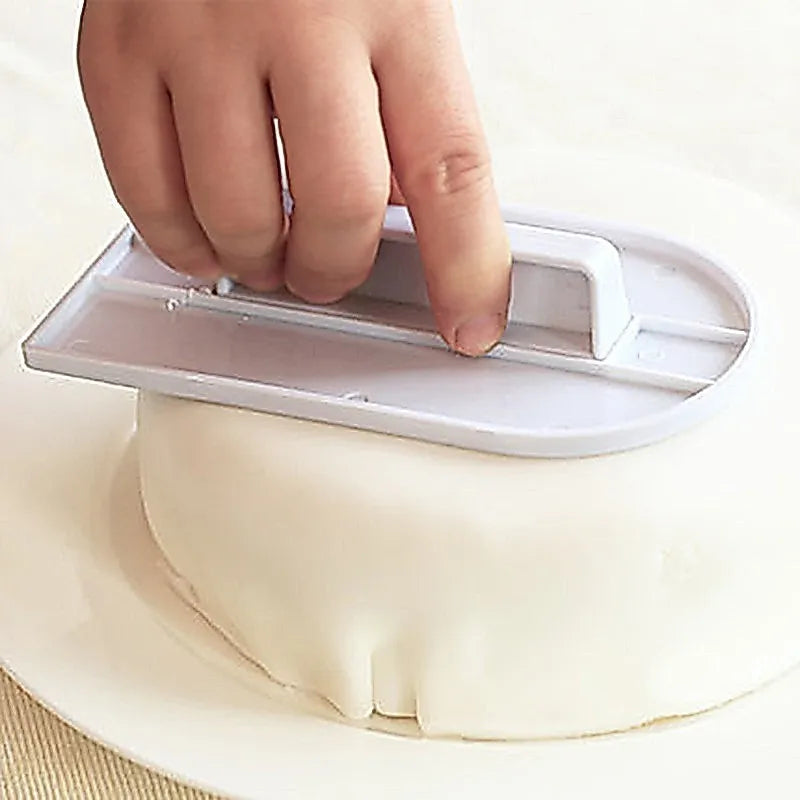
By sliding the smoother over the surface with even pressure, you can gradually work these areas. The goal is not to remove material, but to smooth the coating and improve its appearance before continuing with the decoration.
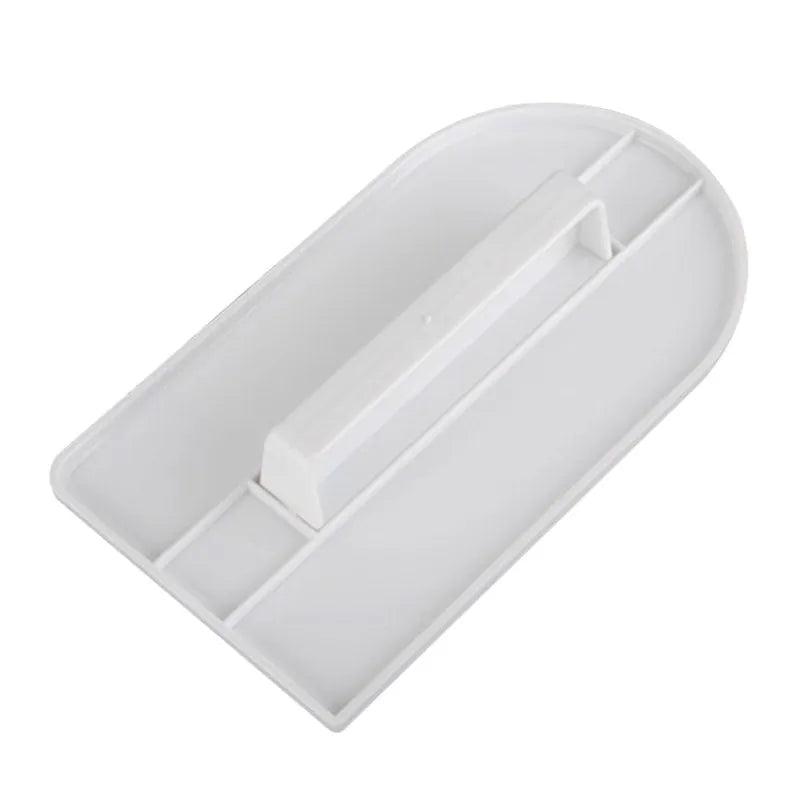
A 14.5 × 8 cm hand tool
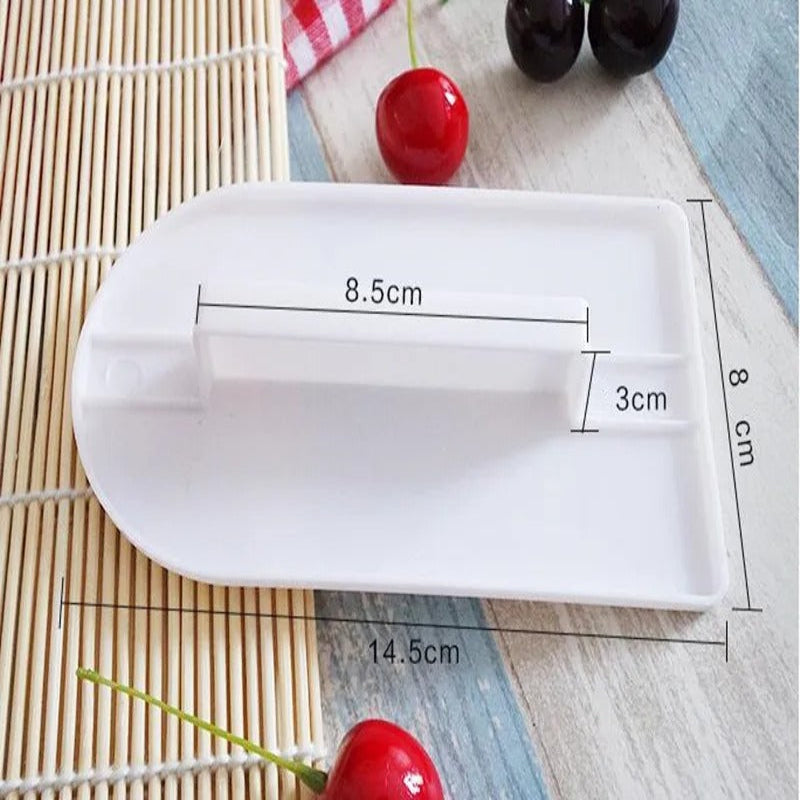
Measuring 14.5 × 8 cm, this accessory provides a surface large enough to work an area of the cake while remaining easy to handle.
Its size makes it particularly easy to control the pressure when you want to correct a specific area rather than working the entire surface at once.
Simple plastic design
The tool is made of plastic. Its compact size makes it easy to store with other cake decorating accessories.
It is sold individually, providing a dedicated smoothing accessory without creating an additional set of tools.
Fondant smoother specifications
| Feature | Detail |
|---|---|
| Type | Fondant smoother |
| Function | Smoothing and leveling surfaces |
| Material | Plastic |
| Dimensions | 14.5 × 8 cm |
| Use | Fondant and cake decorating |
| Sale | Sold individually |
| Dishwasher safe | Yes |
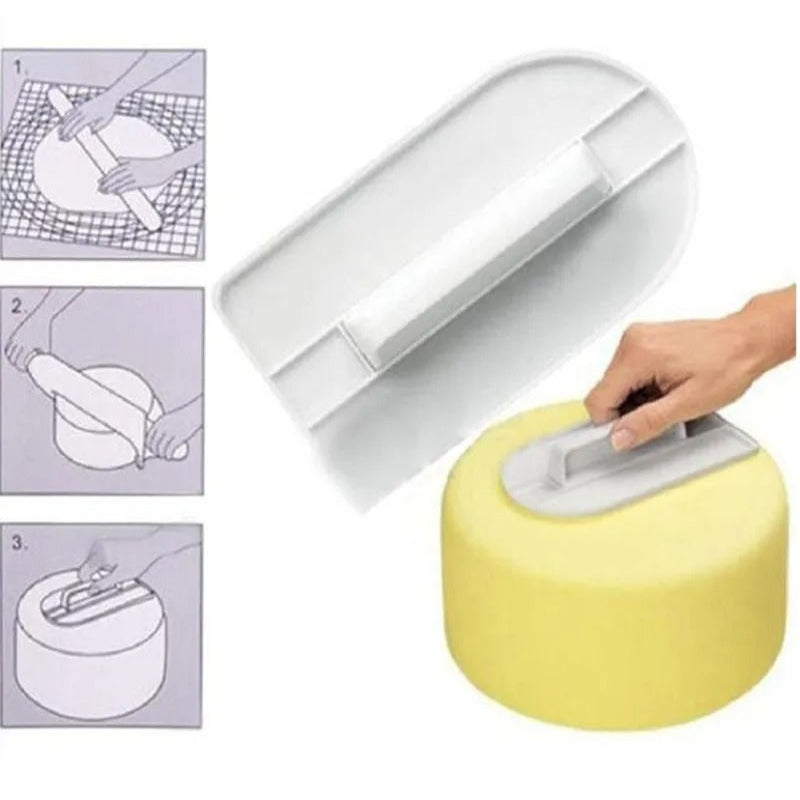
How to use a fondant smoother?
- Cover your cake with the pre-rolled fondant.
- Position the coating correctly on the cake.
- Place the smoother against the surface to be smoothed.
- Gently slide it over the fondant, applying even pressure.
- Gradually work the different areas until you achieve the desired appearance.
For the sides of the cake, work in small areas rather than trying to smooth the entire surface with heavy pressure. This approach allows you to better control the fondant and limit marks caused by overly rough handling.
Fondant smoother or adjustable cake smoother?
Both tools can be used to finish a cake, but their uses differ.
- The 14.5 × 8 cm fondant smoother is a compact hand tool designed to work directly on the coating and small finishing areas.
- The adjustable cake smoother is mainly used to smooth the sides of a cake by adjusting its height to the size of the preparation.
The first is therefore mainly used for working fondant and surface details, while the second is better suited to achieving a smooth finish on the sides of a cake covered in cream or icing.
Cleaning and maintenance
After each use, remove any fondant or preparation residue, then carefully clean the surface of the tool.
Dishwasher safe. Then dry the accessory before storing it to keep it clean for your next decorating project.
Complementary products
- Stainless Steel Adjustable Cake Smoother: designed to complement this step and help you smooth the edges of your pastries.
- Stainless Steel Angled Icing Spatula – Straight or Curved : allows you to spread and smooth your preparations on top of or between the different layers of a cake.
-
Cake decorating turntable : allows you to rotate the preparation while keeping your spatula, piping bag, or other finishing tool in position.
- Lace decorating ruler for creating patterns on cakes : A small tool for easily incorporating lace patterns into your cake decorations.
Related collections
Decoration & finishing accessories
Learn more
How to smooth a cake with a spatula and a turntable
How to achieve smooth icing and sharp edges on a cake?
How to use a cake smoother to achieve even edges
In stock / Delivery / Guarantee
- In stock – limited quantity
- Dispatched within 24–48 hours
- Free delivery with no minimum purchase
- Order tracking sent automatically by email
- Simple returns within 14 days (see terms)
- 100% secure payment (Visa, Mastercard, PayPal)
- Responsive customer service 7 days a week
Frequently asked questions about smoothing fondant
How to smooth a cake covered in fondant without creating creases?
After placing the fondant on the cake, start by gently smoothing the top with the smoother to gradually push out the air. For the sides, work the fondant from top to bottom, bringing it closer to the cake rather than pulling it down. The smoother then helps to level the surface and limit marks left by fingers.
How to remove air bubbles from under the fondant?
A small bubble may appear when air remains trapped between the cake and the fondant. One method is to carefully prick the bubble with a fine needle, then gently smooth the area to close the small mark. The smoother then helps to even out the surface around the correction.
Why does my fondant crease on the sides of the cake?
Creases appear mainly when the fondant is pulled down instead of being gradually pressed against the sides. It is best to gently lift the creased areas, then reposition them before continuing to smooth. A smoother then allows you to work the surface once the fondant is correctly positioned.
How to achieve a smooth fondant finish on the sides of a cake?
The smoothness of the surface under the fondant is important: any bumps in the ganache or covering cream will show through the fondant. Once the coating is applied, work the top first, then the sides with gradual movements. The smoother allows you to apply even pressure to level the surface.
Should I smooth the fondant before or after trimming the excess?
It is best to properly position and smooth the fondant on the cake before trimming the excess around the base. This allows you to check that the coating adheres correctly to the sides and that any creases have been corrected before trimming.
What tool should I use to smooth fondant on a cake?
A fondant smoother is specially designed for this step. Its surface allows you to work the top and sides of the coating without using your fingers directly. To prepare the base of the cake before applying the fondant, a spatula and a ganache smoothing tool can be used as well.
What is the difference between a fondant smoother and an angled spatula?
An angled spatula is mainly used to spread and distribute cream, ganache, or icing. The smoother is then used to level a coating, especially when a cake is covered in fondant or sugar paste. The two tools therefore serve two different steps of the finishing process.
Can I use a fondant smoother on marzipan?
Yes, a smoother of this type can also be used to work a marzipan coating, provided its texture is suitable for smoothing. The principle remains the same: apply gradual pressure to level the surface without distorting the coating.
Can I use this smoother to smooth cake ganache?
The smoother can be used for certain cake finishing tasks, but its main purpose here is working coatings such as fondant or sugar paste. For ganache intended to be perfectly smooth before coating, a scraper or smoothing spatula better suited to the sides of the cake may be preferable.
Why does my fondant tear when I smooth it?
Fondant that is too thin, too dry, or excessively handled can become more difficult to work. Technique also matters: it is better to follow the fondant and smooth gradually rather than applying heavy pressure in the same place. The smoother should be used to level the coating, not to force a resistant paste.
How to smooth fondant without leaving fingerprints?
Once the fondant is correctly positioned, use the smoother to work the accessible areas with its surface rather than repeatedly handling them with your fingers. Work gradually from the center to the edges on top, then on the sides, to maintain a smooth surface.
How to smooth the corners of a cake covered in fondant?
Corners require a more controlled technique than large surfaces. Start by firmly pressing the fondant around the edge without trying to pull it abruptly. Then work the area with the smoother in small passes to gradually define the corner.
How to avoid marks on the fondant while smoothing?
Avoid making multiple passes with heavy pressure. A properly prepared cake surface and sufficiently smooth fondant make the work easier. The smoother should be moved gradually over the coating to distribute the pressure rather than rubbing heavily on a single area.
Can I use a fondant smoother on the top and sides of the cake?
Yes. Smoothing can begin on top to gradually push out the air, then continue on the sides. Working both areas simply requires adjusting the orientation of the tool to the surface of the cake.
How to achieve a perfectly flat fondant surface on a cake?
The smoother cannot correct a very uneven cake base on its own. To achieve a flat surface, start by properly preparing the cake and its coating layer. Once this base is smooth, the smoother allows you to work the fondant applied on top and improve its appearance.
What is the role of the smoother in cake design?
In cake design, the smoother is used when finishing cakes covered with a decorative coating. It allows you to gradually push out the air, press the material against the cake, and level the surface before adding decorative elements.
Get started
Do you regularly work with fondant and want a simple tool to level its surface? This 14.5 × 8 cm fondant smoother supports you through the final steps before decorating, allowing you to gradually work areas that require a smoother finish.
The right tools make the best bakers.
Partager